


More than half of men have at least one case of inflammation of the prostate gland, or so-called prostatitis, in their history. Most often, cases of chronic prostatitis occur. ... A distinction is made between acute and chronic prostatitis.
Benign prostatic hyperplasia (BPH) is a common disorder that occurs in 50% of men at age 50 and in 80% at age 80 and older. The disorder is characterized by a gradual enlargement of the prostate, which ultimately leads to urological obstruction and the development of corresponding urination problems. The etiology of BPH is partly related to changes in hormone levels, including a general increase in the ratio of estrogens to androgens and an increase in the level of the potent androgen dihydrotestosterone (DHT) in prostate tissues, which occurs as a result of abnormally high activity of 5-alpha reductase. Allopathic treatment strategies include 5-alpha reductase inhibitors, alpha-blockers, diuretics, and surgery. In addition to pharmacological treatment, natural agents are used worldwide to maintain prostate health: saw palmetto berries, nettle extract, amino acid complexes, specific nutrients such as zinc and vitamin B6.
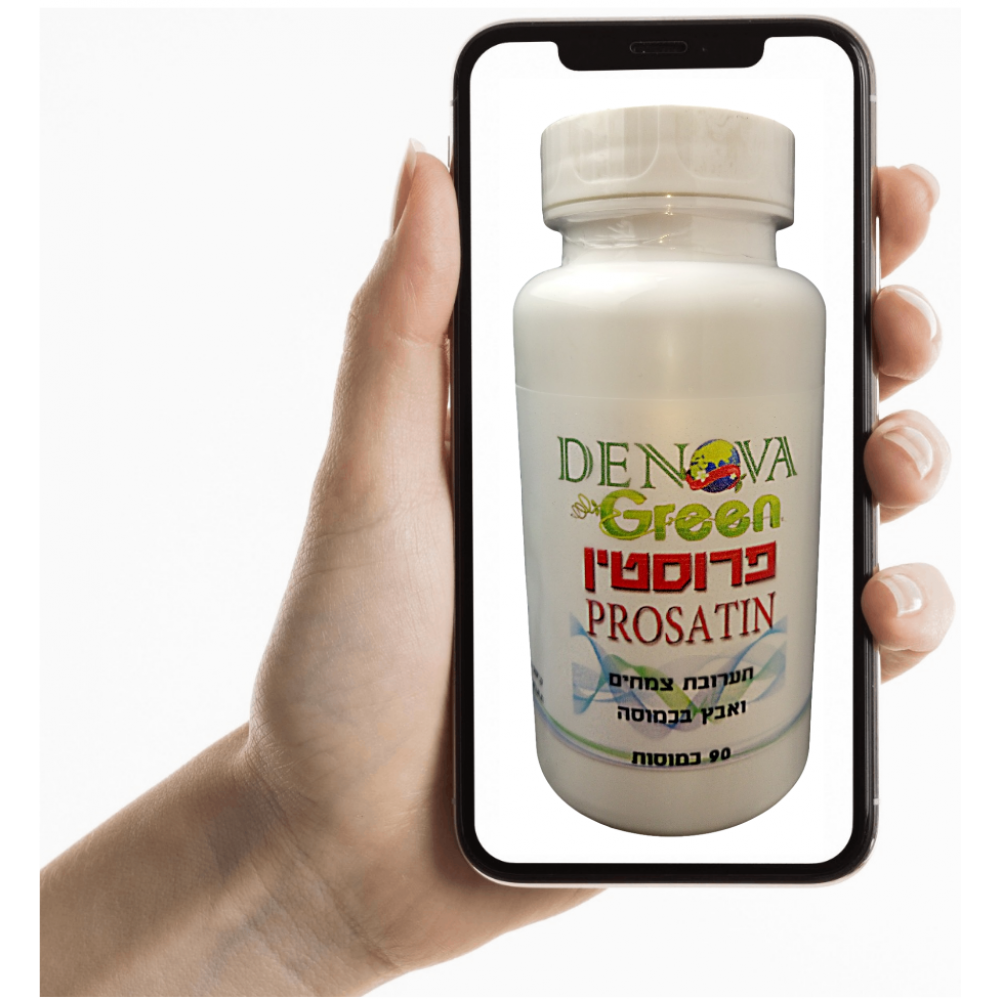
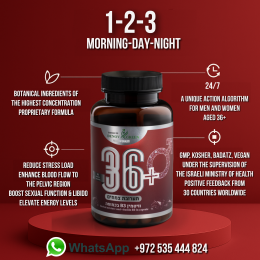
The natural plant preparation PROSATIN is a natural collection of herbs and trace elements, the algorithm and proportions of which are aimed at addressing inflammation of the prostate gland and benign tumors.
Briefly about the properties of the herbs and trace elements included in the capsule.
The only species — Saw palmetto (Latin: Serenoa repens): a plant growing in the southeastern United States (Florida, Arkansas, Texas), usually in pine forests or along coasts, sometimes also found on the islands of the Caribbean Sea and on the Yucatan Peninsula.
Ancient Indians used this plant as a remedy for various diseases. The local population traditionally uses the fruits of the saw palmetto palm as food, since they have a tonic effect on the human body. In non-evidence-based medicine, it is used as an auxiliary remedy in the treatment of prostate function disorders.
Serenoa repens has been traditionally used as water and ethanol extracts. It is stated to possess diuretic, urinary antiseptic, endocrinological and anabolic properties. Traditionally it has been used for chronic or sub-acute cystitis, catarrh of the genitourinary tract, testicular atrophy, sex hormone disorders and most specifically for prostatic enlargement. Inflammation of lactic glands in the breast, eczema, bronchial pathology and cough are also mentioned as indications in traditional medicine. It has been deemed to enhance sexual desire. There is no scientific support for these traditional applications (Barnes et al., 2007; Hänsel et al., 1994). The main interest in Serenoa repens has focused on its use in the treatment of symptoms of benign prostatic hyperplasia (BPH), in particular, grade I to III (Vahlensieck; see Table 7). Preparations are used to alleviate micturition disorders such as, dysuria, pollakisuria, nocturia and urine retention (Barnes et al., 2007; Hänsel et al., 1994; Van Hellemont, 1985; ESCOP, 2003).
Possible mechanisms of action of saw palmetto berries:
inhibition of 5-alpha-reductase activity, reduction of DHT concentration in prostate tissues;
antiandrogenic action through competitive inhibition of DHT binding to androgen receptors;
antiestrogenic action;
anti-inflammatory and anti-edematous action;
Serenoa repens is traditionally used as water and ethanol extracts. It is claimed to possess diuretic, antiseptic, endocrinological and anabolic properties. Traditionally it has been used for chronic or acute cystitis, catarrh of the genitourinary tract, testicular atrophy, sex hormone disorders and especially for prostate enlargement. Inflammation of the mammary glands in the breast, eczema, bronchial pathology and cough are also mentioned as indications in traditional medicine. It is considered to improve sexual desire. There is no scientific support for these traditional (Barnes et al., 2007; Hänsel et al., 1994).
The main interest in Serenoa repens has focused on its use in the treatment of symptoms of benign prostatic hyperplasia (BPH), in particular, grade I-III (Vahlensieck, see Table 7). The preparation is used to alleviate urination disorders such as dysuria, pollakisuria, nocturia and urine retention
(Barnes et al., 2007; Hänsel et al., 1994; Van Hellemont, 1985; ESCOP, 2003).
The Austrian herbalist Maria Treben first reported in 1983 on the medicinal properties of small-flowered willowherb (Latin: Epilobium parviflorum) and its use in urology, in particular for prostate diseases. She claimed that an infusion of small-flowered willowherb is a radical remedy for treating inflammation of the prostate of any severity, and is also very effective for prostate adenoma. In addition, willowherb has a positive effect in malignant tumors of the bladder and prostate. These data were confirmed by the German pharmacists Barbara and Peter Theiss. In Austria, at the Institute of Pharmacognosy and the Institute of Experimental and Clinical Pharmacology, a comparative study of small-flowered willowherb (Latin: Epilobium parviflorum) was conducted.
Stinging nettle is a valuable food plant. Composition: crude protein 22.2%, pure protein 16.7%, fat 2.15%, fiber 35.6%, nitrogen-free extractive substances 22.1%, ash 17.8%, ascorbic acid 12/V 49 — 17/V 72 mg%, 10% starch, about 1% sugars, many iron and potassium salts. This plant has been used in medicine since ancient times. Caesar's legionnaires during the Gallic War whipped themselves with nettle to warm up. In Russian herbals, nettle is mentioned from the 16th century as an effective remedy for wound healing.
Stinging nettle is traditionally known as a diuretic. Not long ago, nettle's ability to reduce genitourinary disorders associated with BPH was identified. A recent study confirmed this property, in particular with respect to an aqueous solution of nettle extract. This confirms the extract's ability to influence testosterone metabolism by reducing its ability to bind to SHBG.
Some clinical data show that stinging nettle may help alleviate subjective and functional symptoms in patients with BPH. The scientist Vontobel and colleagues noted a significant improvement in urination and an increase in urine volume when taking stinging nettle extract for 9 weeks compared with the placebo group. They also noted a serious decrease in SHBG levels in patients treated with the extract of this plant. Similar improvements in BPH symptoms were noted by the scientist Romik. These improvements included a significant reduction in residual urine volume and improved urination (in 50% of patients) when consuming stinging nettle extract. Patients noted a significant subjective alleviation of symptoms.
Zinc
The trace element zinc plays an important role in maintaining the function and health of male reproductive tissues, including the prostate. Zinc deficiency leads to a decrease in blood testosterone levels, impaired sperm morphology, and a reduction in semen volume.
Zinc is present in prostate tissues in higher concentration than in other body tissues and plays a role in testosterone metabolism. Androgens increase zinc uptake, while estrogens reduce it. Since BPH is associated with an increase in the ratio of estrogens to androgens, a relative excess of estrogens may disrupt zinc absorption. In addition, preliminary studies have shown that zinc may have an inhibitory effect on 5-alpha reductase, the binding of DHT to androgen receptors in prostate cells, and block prolactin secretion by the pituitary gland. Prolactin, in turn, increases the absorption and metabolism of testosterone by prostate cells, which can lead to an increase in DHT levels. Clinical trials are needed to confirm the positive effect of zinc intake on the course of BPH.
-
No questions yet


190.8 $
Tags: PROSATIN, 90 caps, PROSATIN, 90 капсул, DENOVA GREEN
Спасибо Борис за ваш отзыв и ваши рекомендации.
Через 5 месяцев сделал подробные анализы, опять-таки по рекомендации доктора Габриэля, все показатели пошли вверх, мой врач поднял брови вверх.
Вот такие есть штуки в Израиле, хотя эти биотехнологии и неизвестны например у нас в России я рекомендую каждому кто прочитает мой отзыв - по заслугам пишу.
Спасибо доктор Габоиэль.
Уважаемый Станислав, спасибо за такой развёрнутый отзыв, мы рады, что вы стали постоянным покупателем и рекомендуете препараты DENOVA своим друзьям.
Спасибо Дэни за ваш отзыв. Мы рады , что препараты DENOVA GREEN и в частности PROSATIN вам помогают.